

How Has Makeup Changed Over The Years
A woman with a "perfect body" in 1930 would barely go a second wait from Hollywood producers or model casting agents today.
Addiction and eating disorder recovery site Rehabs.com worked with digital marketing agency Fractl on a projection looking at the origins of Body Mass Index (BMI) measurements, and how the bodies of ideal women have compared to national averages over time. And their findings show that models and picture stars are getting smaller than the boilerplate American woman at unprecedented rates.
Though BMI measurements don't distinguish betwixt fat and muscle, and are thus fairly inaccurate in determining whether someone is obese or not, BMI data from the past makes for interesting comparisons. According to the Center for Affliction Control, the BMI of the average American women has steadily increased over the past half a century, from 24.9 in 1960 to 26.5 in the nowadays mean solar day.
In a similar vein, Rehabs.com found that the difference between models' weights and the weight of the average American woman has grown from 8 percent in 1975 to over 23 per centum today. The bottom line? At that place's more of a noticeable gap between the bodies of idealized women and everyday people.
Picking upwards on this disparity, brands like Pigeon, Debenham's and H&Thousand have made efforts to include diverse torso types in their catalogs and ads. Organizations like The Representation Project are working to educate women and girls nearly media literacy and how to handle the sexualized images of women we see on television, billboards and the Internet. (Of class, nosotros still have a very long way to become.)
In add-on to the work of brands and organizations, looking back on the "ideal" women throughout the past century tells us merely how arbitrary any vision of "the perfect body" is. Sexual activity symbols have varied in terms of body shape, height, weight and tone, from the hourglass figure of Mae West to the waif-like Kate Moss. Though the variety of these icons is limited -- they are all white, and none could be accurately described as plus-size -- information technology's gratifying to see that unlike body types take been construed every bit sexy, and likely will be once again.
Hither's how the "ideal body" has inverse in the past 100+ years:
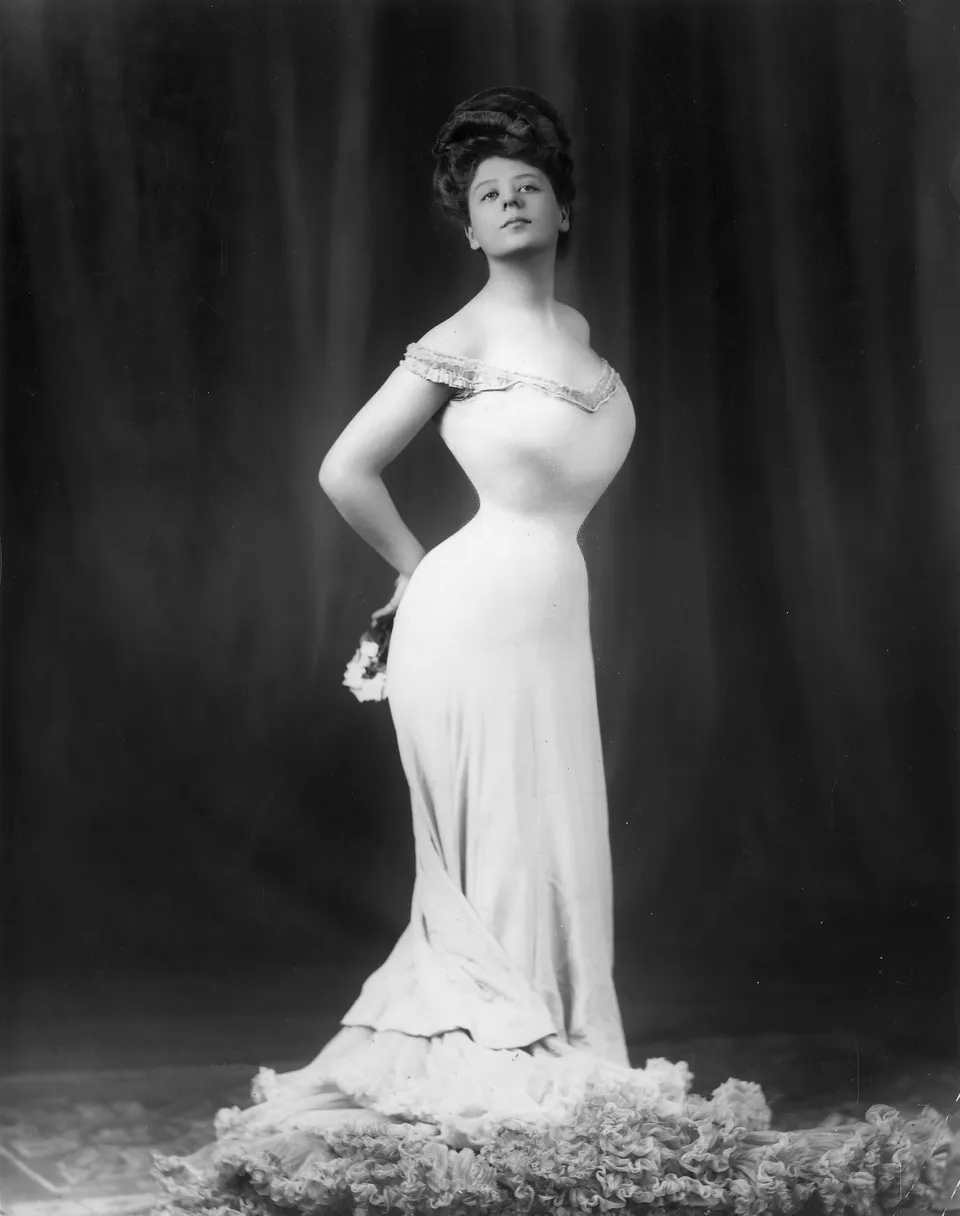
The Gibson Daughter, 1900-1910s
Getty
The "Gibson girl" was the creation of illustrator Charles Dana Gibson, a type of woman that came to recap the platonic feminine beauty at the turn of the century. Gibson described the figure, who was alpine with a big bust and wide hips merely a narrow waist, equally a composite of immature women he'd observed.
In 1910, he told a reporter for the Lord's day Times Magazine: "I'll tell you lot how I got what you have called the 'Gibson Daughter.' I saw her on the streets, I saw her at the theatres, I saw her in the churches. I saw her everywhere and doing everything. I saw her idling on Fifth Avenue and at work behind the counters of the stores."
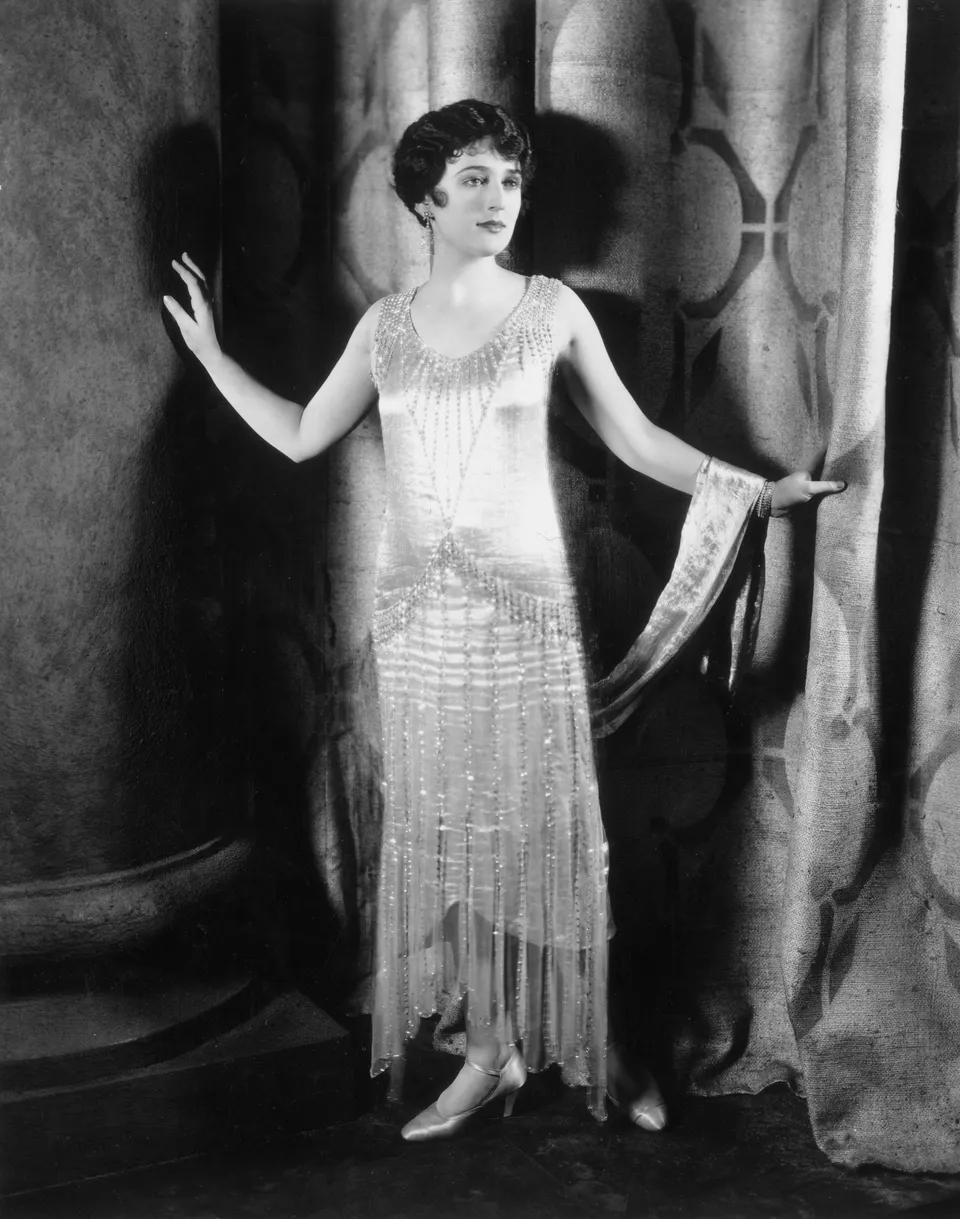
The Flapper, 1920s
Getty
Flappers were known for their bobbed hair, shortened dresses and "scandalous" beliefs such as smoking in public and driving cars. Flappers rarely wore corsets, downplaying their breasts and waists, and ofttimes showed their ankles or knees.
In 1920, a lecturer named R. Murray-Leslie described flappers as "the social butterfly blazon… the frivolous, scantily-clad, jazzing flapper, irresponsible and undisciplined, to whom a trip the light fantastic, a new chapeau, or a man with a car, were of more than importance than the fate of nations."
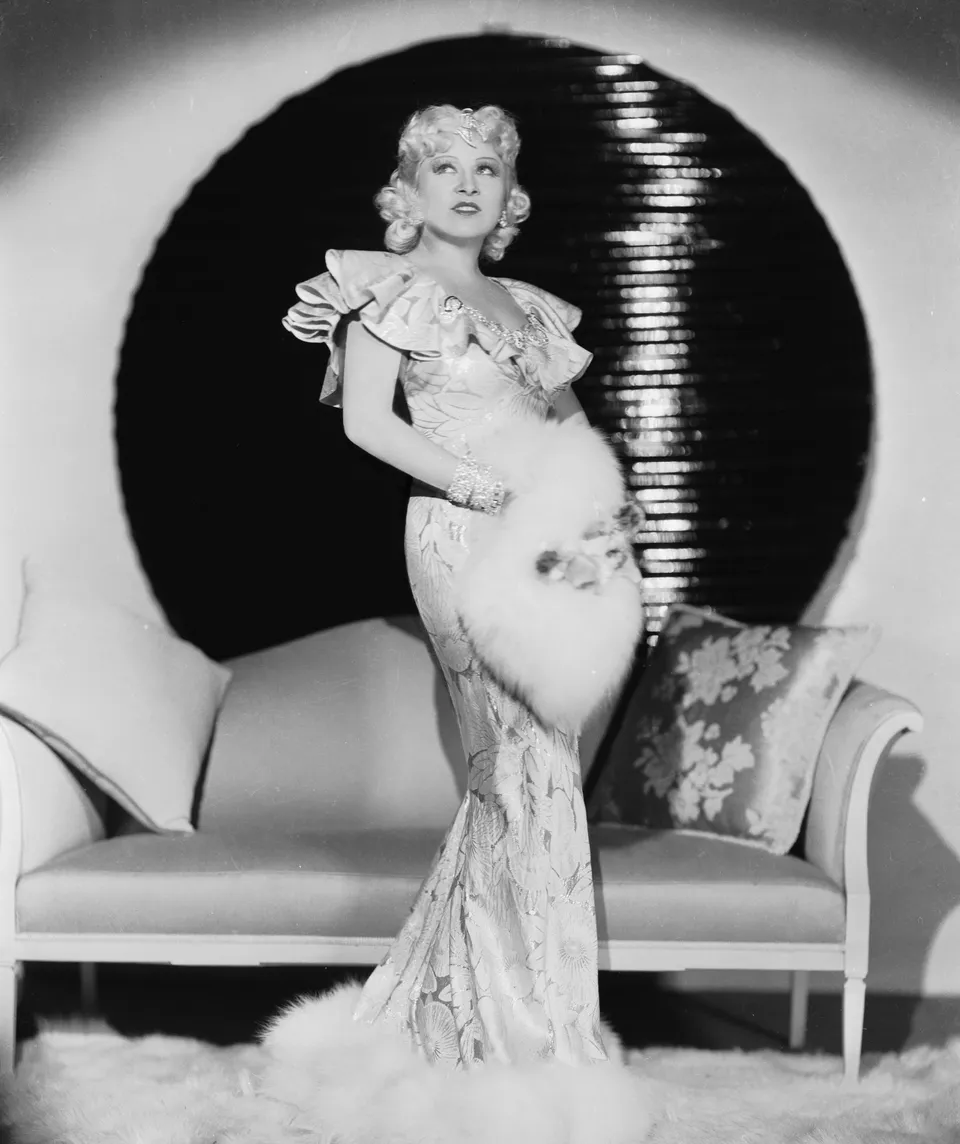
Mae West, 1930s
Getty
Hollywood star Mae West could not have been more unlike from the flappers. She emphasized her waist and hips, flaunting her figure through close-fitting dresses.
Westward allegedly in one case said: "Cultivate your curves -- they may be dangerous but they won't be avoided."
Rita Hayworth, 1940s

Getty
During World War II, the platonic moved away from the unattainable curves of Mae Due west and the carefree attitudes of the flapper. Stars like Rita Hayworth had flawless peel and salubrious, slender bodies, a look not too far away from that of the average American adult female.
Marilyn Monroe, 1950s

Getty
Sex activity symbols of the 1950s include Marilyn Monroe, Jayne Mansfield and Betty Page, known for their long legs and busty hourglass figures. Pin-upwardly girls similar Sophia Loren and Brigitte Bardot exuded glamour.
"The body is meant to exist seen, non all covered upward," Monroe once said.
Twiggy, 1960s

Getty
Along with the sexual revolution, the 1960s brought with it a new dazzler ideal -- slender and long-legged. Loftier-manner model Twiggy Lawson became famous for her modest frame and "androgynous" wait -- a nod to the flapper ideal.
Twiggy has spoken out against the thinness ideal while recognizing her own role in perpetuating it.
"I was a very, very skinny model in the 60s, but naturally... that's what I looked like," She told The Huffington Post in 2010. "I ate. I always said I ate, and I looked like my dad who was very skinny, then I think that's genetic... if you are 17 years old and y'all are v-foot-xi, the chances are you lot're going to be thin."
Farrah Fawcett, 1970s

Getty
The platonic 1970s beauty was tanned with flowing hair and a slim, toned body -- an athletic await with minimal or "natural" makeup. Actress Farrah Fawcett was considered ane of the decade'due south most cute women.
The '70s also saw the rise of anorexia nervosa every bit larger numbers of women strove to be sparse. CORRECTION: An before version of this story misspelled Farrah Fawcett's proper noun.
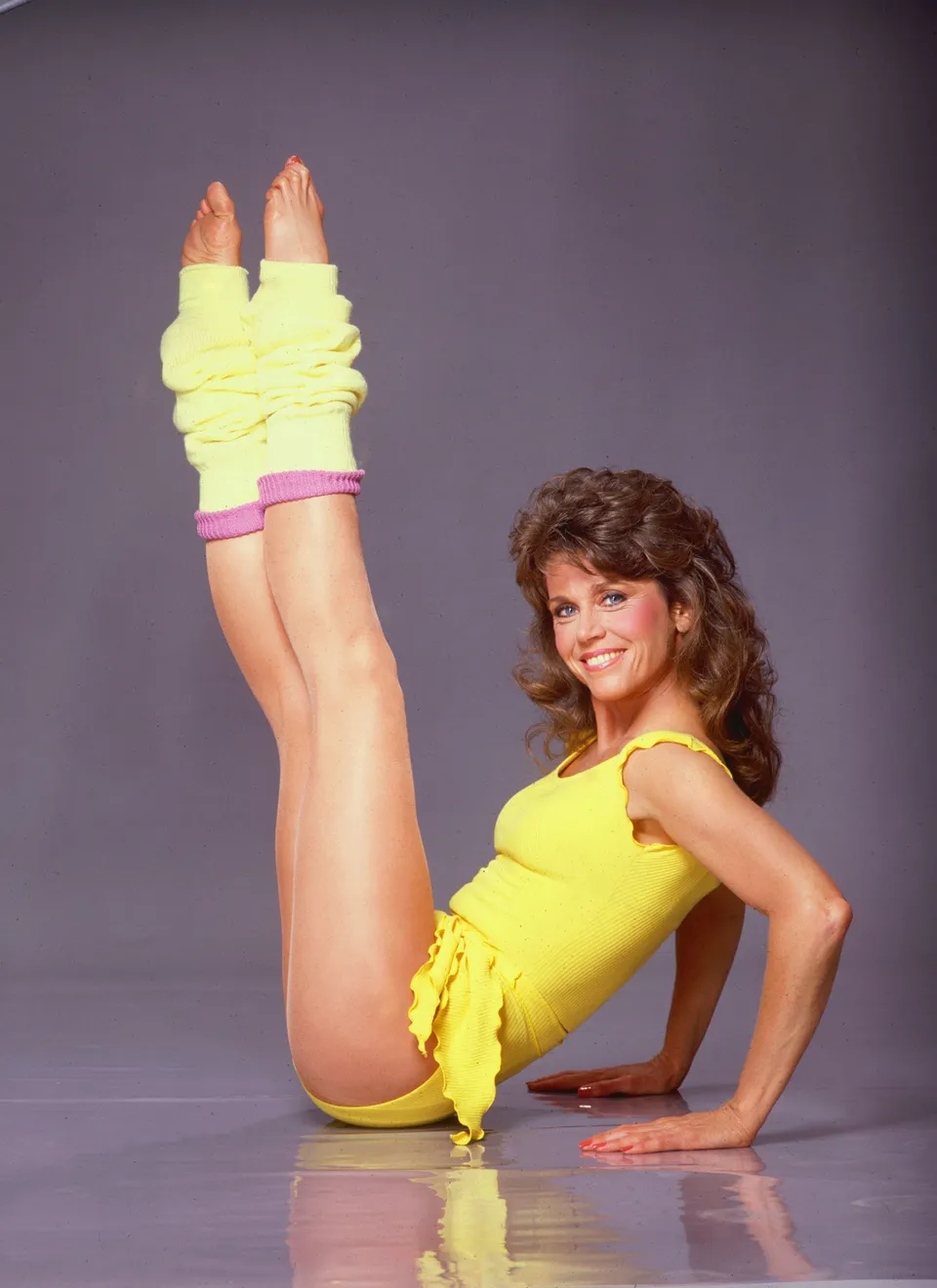
Jane Fonda, 1980s
Getty
As an athletic body blazon became more popular, "hardbodies" -- incredibly toned, slim women -- were considered incredibly bonny. Beingness thin was ideal; existence thin and strong was even better. According to Rehabs.com, 60 percent of 1980s Playboy models weighed 15 percent less than the healthy average weight for their size.
Actress Jane Fonda was the face up of the fitness craze and the epitome of the "hardbody" -- her aerobic do videos sold millions of copies.
The 80s also saw the introduction of supermodels like Naomi Campbell and Claudia Schiffer, whose tall, thin bodies were far from the average American adult female's body type.
Kate Moss, 1990s

Calvin Klein
In the 1990s, models got drastically thinner. Kate Moss' waif-similar appearance in her 1993 Calvin Klein campaigns coined the term "heroin chic" -- pale pare, athwart bone structure and extremely thin limbs were in fashion.
Moss has famously said, "Nothing tastes as good every bit skinny feels."
Adriana Lima, Early 2000s

Getty
The 2000s brought us the reign of the Victoria'due south Secret Angel -- alpine, thin and leggy models with large breasts, flowing hair and toned bodies. Brazilian model Adriana Lima has been a VS Angel since 2000.
To read more on this topic, check out the total study from Rehabs.com.
CORRECTION: A previous version of this story misidentified a photo of Clara Bow as Mae West. The prototype has been updated.

Torso Image Heroes

How Has Makeup Changed Over The Years,
Source: https://www.huffpost.com/entry/perfect-body-change-beauty-ideals_n_4733378
Posted by: renardsairch.blogspot.com
0 Response to "How Has Makeup Changed Over The Years"
Post a Comment